
How to Remove Cigarette Smell From Walls (and When Paint Alone Won't Work)
You can’t paint over cigarette smell and expect it to stay gone, but there’s a reliable way to remove cigarette smell from walls for good. It takes cleaning first, the right kind of primer, and sometimes two coats, not just a fresh color on top.
By Nelson Portillo, owner · September 11, 2026 · 8 min read
Why Cigarette Smoke Gets Into Everything
Cigarette smoke isn’t just an odor sitting in the air. It’s tar and nicotine residue that clings to whatever it touches, and drywall, plaster, and painted trim are some of the most porous surfaces in a house. Every time someone smoked indoors, a thin film of that residue settled into the paint, the texture, and even the paper backing behind the drywall. Over months and years, it builds into a yellowish film you can sometimes spot around light switches, door frames, and ceiling corners. Even where you can’t see it, the smell is sitting in that same layer. That’s the reason painting straight over it usually traps the smell under a fresh coat instead of getting rid of it.
Why Paint Alone Won't Fix It
A lot of homeowners try to solve smoke odor with a can of regular wall paint and a free weekend. It rarely holds. Standard latex paint isn’t built to seal in odor or block stains, and nicotine residue is oil and tar based, so it can bleed straight through a regular coat within a few weeks, leaving a faint yellow shadow behind while the smell creeps back through. Air fresheners, candles, and ozone machines can mask the smell for a little while, but none of them change what’s soaked into the walls. If the smell comes back a month or two after you’ve tried to cover it up, that’s usually the tar and nicotine working their way through, not new smoke somewhere else in the house.
Signs the Damage Goes Deeper Than the Surface
A few signs point to smoke damage that’s more than skin deep. A yellowish tint around outlets, vents, and ceiling corners usually means the residue has built up over a long period. A smell that gets stronger when the heat or air conditioning kicks on often means the ductwork has been circulating smoke for years, not just the walls holding onto it. And a smell that’s noticeably stronger in closets, behind furniture, or in rooms that stayed shut most of the time usually means those areas need extra attention during cleaning and priming, since they had less air movement to dilute it over the years.
The Right Way to Remove Cigarette Smell From Walls
Getting rid of the smell for good comes down to four steps, done in the right order.
Step 1: Clean Before You Paint Anything
Painting is the last step, not the first. Walls, ceilings, trim, and even closet interiors need a real cleaning first, wiping down every surface to remove as much of the tar and nicotine film as possible before primer goes anywhere near it. Skipping this step just seals dirt and residue under the primer instead of removing it.
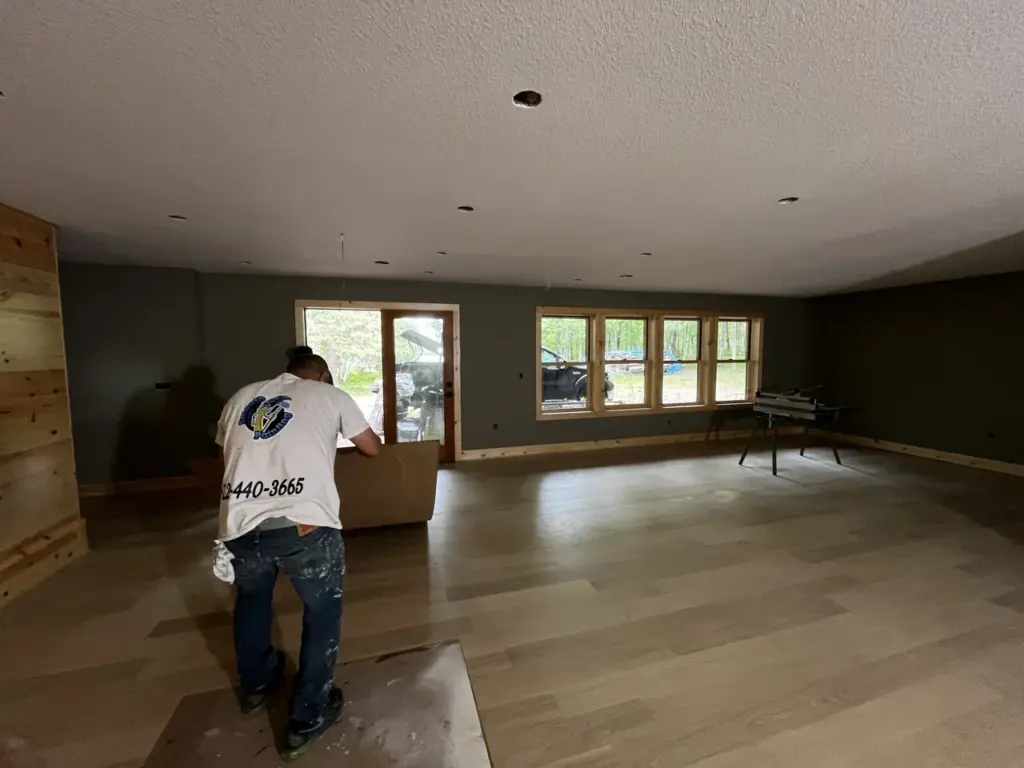
Cleaning and masking a room before priming, the step that actually removes smoke residue instead of sealing it in.
Step 2: Use a Shellac-Based, Stain-Blocking Primer
This is the step that actually makes the difference. A shellac-based primer seals in stains and odor in a way ordinary water-based primers usually can’t match, especially in a house that was smoked in regularly for years. It dries fast, sticks to almost any surface, and creates a real barrier between the old residue and the new paint color going on top.
Step 3: Don't Skip Ceilings, Closets, and Trim
Smoke rises, so ceilings usually hold onto more residue than walls, even though they’re often the last thing homeowners think to redo. Closets that stayed shut most of the time can trap smoke smell for years. Trim and doors get missed constantly because they don’t look stained the way walls do, even though the smell is often strongest right there.
Step 4: Know When You Need a Second Coat
A house that was lightly smoked in for a year or two might only need one coat of primer before paint. A house where someone smoked heavily indoors for a decade or more almost always needs two coats, sometimes with a light scuff sand in between, before the smell and staining are fully sealed off.
Here’s how the common options actually compare.
| Primer Type | Blocks Nicotine Stains | Blocks Odor Long-Term | Typical Dry Time | Best For |
|---|---|---|---|---|
| Plain wall paint, no primer | No | No | N/A | Fresh walls that were never smoked in |
| Water-based odor-block primer | Partial | Short-term only | 1 to 2 hours | Light, recent odor |
| Oil-based stain-blocking primer | Yes | Mostly | 4 to 6 hours | Moderate smoke exposure |
| Shellac-based stain-blocking primer | Yes | Yes | 30 to 45 minutes | Heavy or long-term smoke damage |
This Isn't the Same as Fire or Water Damage Restoration
It’s worth separating this from what a fire and water restoration company handles. Those companies are usually working an insurance claim after an actual fire, dealing with smoke damage from a specific event along with soot, water, and structural repairs. A house that was simply smoked in over the years by a previous owner or tenant is a different problem entirely: no insurance claim, no fire, just years of residue built up in the walls. It’s a painting problem, not a restoration claim, and it should be treated, and priced, that way.
When Paint and Priming Alone Won't Work
Most homes can be fully corrected with a proper clean, a shellac-based primer, and paint, even after years of heavy smoking indoors. A few situations need more than that, though. If the HVAC system pulled smoke through the house for years, the ductwork itself can keep circulating that smell no matter how well the walls get sealed. Carpet, padding, and insulation can also hold onto smoke odor long after the walls are clean, especially in bedrooms and basements. In those cases, painting still has to happen, but it works best paired with duct cleaning or carpet replacement, not as a stand-alone fix.
Here’s roughly what to expect based on how long and how heavily a house was smoked in.
| Smoking History | What the Walls Usually Need | What Else to Check |
|---|---|---|
| Light or occasional, under 2 years | Clean plus one coat of stain-blocking primer | Usually nothing else |
| Regular indoor smoking, 2 to 10 years | Clean plus shellac-based primer, one to two coats | Closets, trim, ceiling corners |
| Heavy daily smoking, 10-plus years | Clean plus shellac-based primer, two coats | HVAC ducts, carpet, insulation |
What This Looks Like on a Real Job
On a typical smoke-damage job, the process starts the same way every project does: a free, on-site estimate instead of a guess over the phone, so the actual condition of the walls gets seen in person before any number gets written down. From there it’s a written, detailed proposal covering the cleaning, priming, and paint steps specific to that house, morning and evening updates while the crew is on site, and a final walkthrough before anything gets invoiced. Nelson has more than 10 years in the painting trade, and treats a smoke-damaged house the same way as any other repaint: clean first, prime right, then paint. You can see examples of finished interior work from past projects around the east metro.
This kind of work fits naturally into a normal interior painting project, whether it’s one room or a full house, and it doesn’t need special scheduling outside the timeline already planned for the rest of the job. Homeowners in Shoreview and Vadnais Heights run into this fairly often when they buy an older home that turns out to have been smoked in for years, sometimes without much warning during the walkthrough.
Frequently Asked Questions
Cleaning first makes a real difference. Priming over walls that still have a film of tar and nicotine on them just seals that residue under the primer instead of removing it, and the smell usually finds its way back through within a few weeks. A wipe-down before priming gives the primer a cleaner surface to actually bond to and block.
Regular ceiling paint isn’t built for that job. Nicotine residue is oil and tar based, and it can bleed straight through standard latex paint, showing up as a yellowish shadow within a month or two. A shellac-based, stain-blocking primer underneath is what actually stops both the staining and the smell from working their way back through.
It depends on how long and how heavily someone smoked inside. A house with light, occasional smoking over a year or two often only needs one coat of a stain-blocking primer. A house where someone smoked daily for a decade or more usually needs two coats to fully seal the residue and odor before paint goes on.
Painting only addresses what’s on the walls, ceilings, and trim. If someone smoked inside for years, the HVAC ducts and any carpet or padding in the house can hold onto that smell separately, and they’ll keep circulating or releasing odor even after the walls are fully sealed and repainted. Duct cleaning and carpet replacement usually need to happen alongside the painting, not instead of it.
For most homes, the cleaning, priming, and painting can be done in the same timeframe as a normal interior repaint, usually a matter of days depending on the size of the house. Houses with heavier, longer-term smoke damage take a bit longer because of the extra coat of primer and additional cleaning involved.
Odor-blocking paints marketed at hardware stores are water-based and tend to only handle light, recent smells. A shellac-based, stain-blocking primer is built specifically to seal in tar, nicotine, and the odor that comes with it, which is why it holds up so much better in a house with real smoking history rather than just a few occasional cigarettes.
Ready to Remove Cigarette Smell From Walls in Your Home?
If you just bought a house that reeks of cigarette smoke, or you’re finally ready to deal with years of smoking in your own home, the fix is straightforward once it’s done in the right order: clean first, prime with the right product, then paint. Smooth Painting handles this as part of regular interior painting work, starting with a free, on-site estimate so you get an accurate plan instead of a guess. Reach out to get a walkthrough scheduled and find out what your house actually needs.
Nelson Portillo
Owner of Smooth Painting. Nelson has 10+ years in the painting trade, from helper to crew supervisor, and has run his own crews across the east and north Twin Cities metro since 2022.
On this page
- Why cigarette smoke gets into everything
- Why paint alone won’t fix it
- Signs the damage goes deeper than the surface
- The right way to remove the smell
- When paint and priming alone won’t work
- Frequently asked questions
Schedule Your Free Estimate
We come to your home, walk the project with you, and send a written estimate with clear pricing. No cost, no obligation.
Related Services
- Interior Painting
- Smoke & Nicotine Damage Sealing
- Deck & Fence Staining
More Painting Tips for Minnesota Homeowners
Ready for a real quote?
Pick a time that works, we come out and look at the actual job, and you get a written proposal with clear pricing. Nothing owed either way.